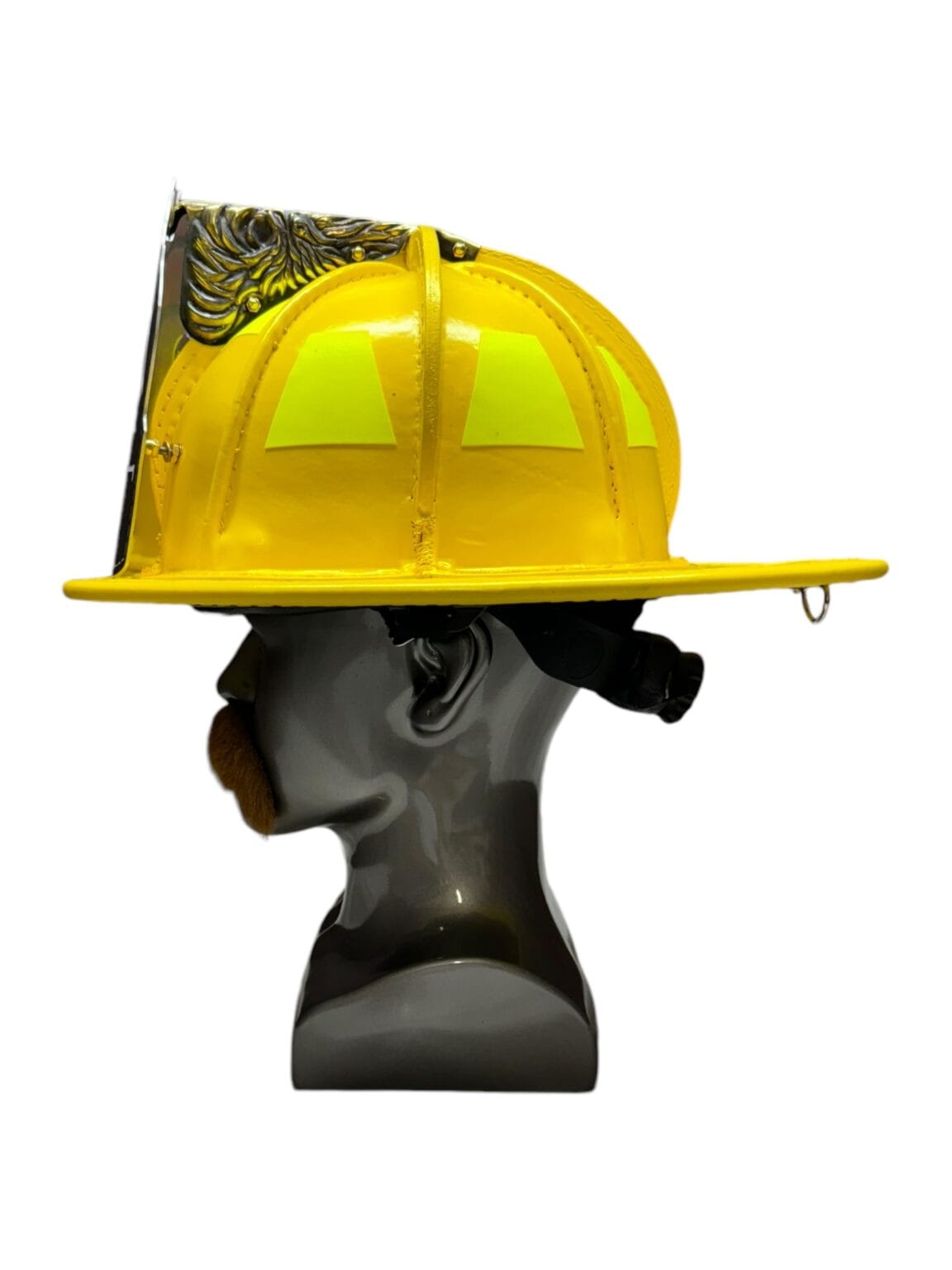
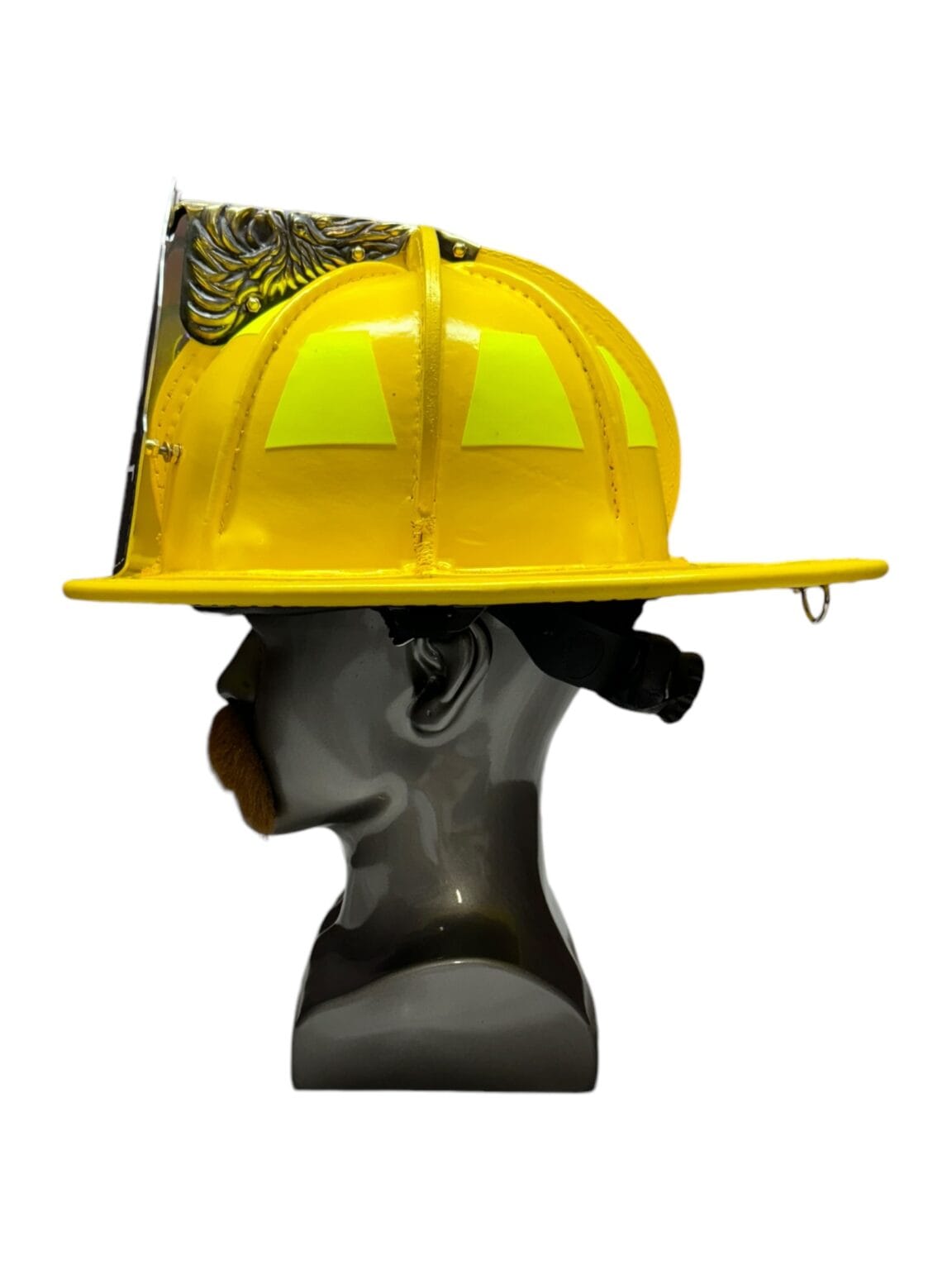
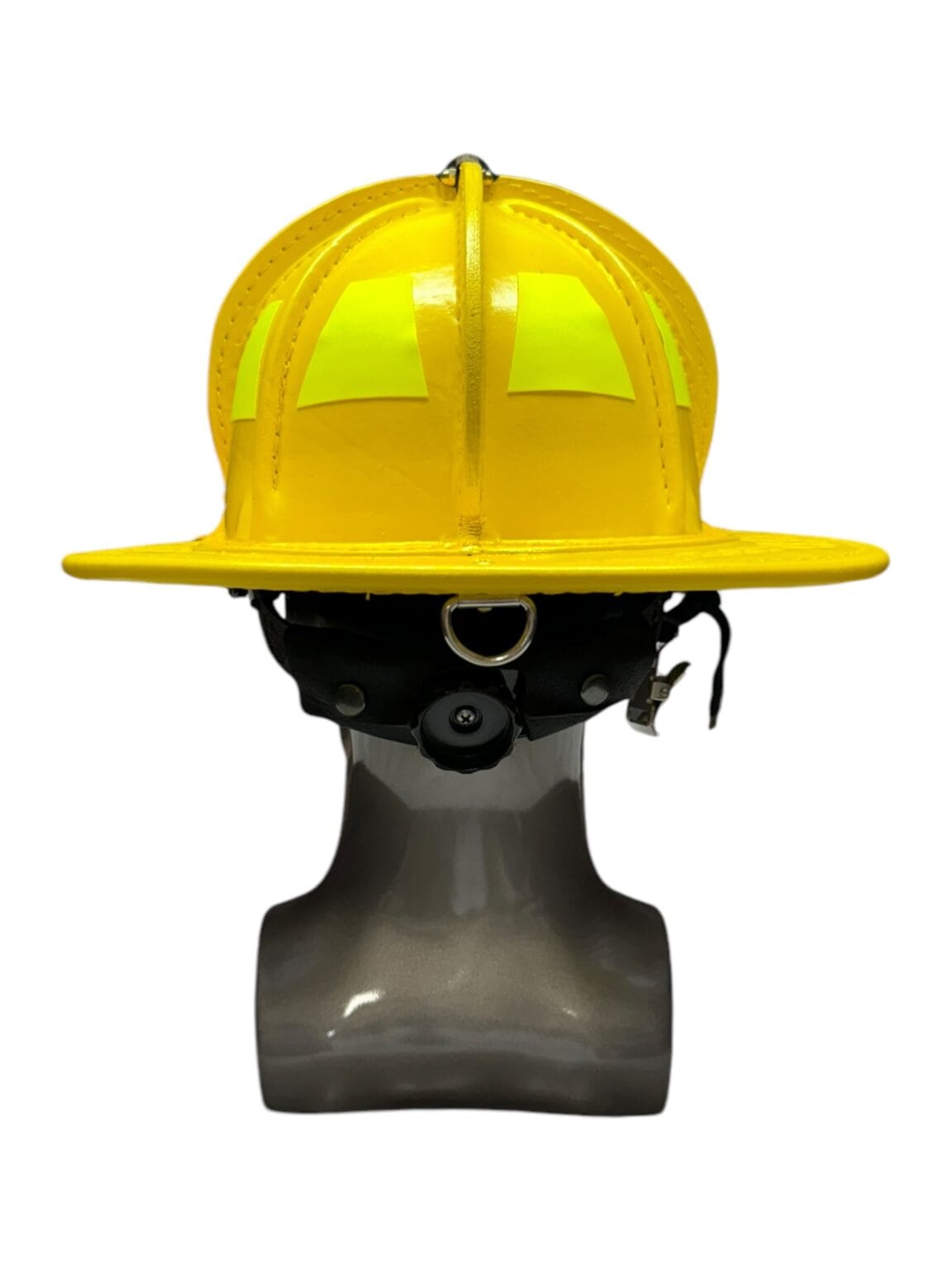


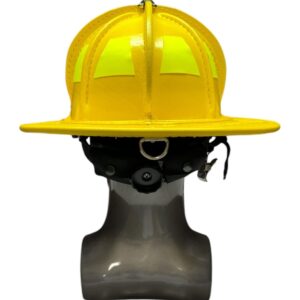
Yellow Tl2 leather helmets

$1,200.00
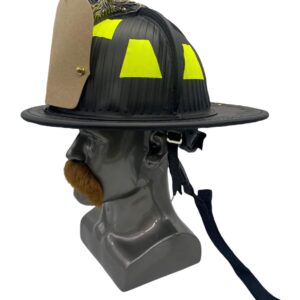
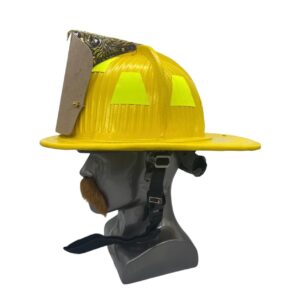
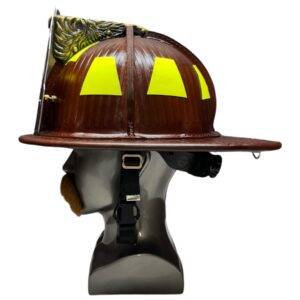
Striking Yellow Leather Fire Helmet: Bold Protection with Legacy
Charge into the fray with the Striking Yellow Leather Fire Helmet – a vibrant beacon of bravery for structural firefighters who blend high-visibility style with unbreakable defense. Handcrafted from premium vegetable-tanned leather, this NFPA 1971-compliant icon is the lightest authentic leather helmet on the market, weighing just 55 ounces to minimize neck fatigue and maximize endurance during grueling shifts.
Boasting a low-center-of-gravity design for balanced mobility, adjustable ratchet suspension (sizes 6 3/8″ to 7 1/2″), and plush Nomex liners for sweat-wicking comfort, it shields against 500°F heat, impacts, and debris while turning heads on scene. Customize with reflective trim, brass eagles, or department emblems for that personalized punch – trusted by crews worldwide since the leather tradition began.
More than gear, it’s your frontline ally in yellow glory. Order now and light up the line!
Yellow Leather Fire Helmet: The Complete Guide to This Fire Service Icon
There’s something instantly recognizable about a yellow leather fire helmet—it stands out for both its vibrant color and its deep connection to fire service tradition. Unlike the white helmets reserved for chief officers or black helmets that dominate many departments, the yellow leather fire helmet carries its own unique story and practical advantages that have made it a favorite among firefighters for generations.
Whether you’re a firefighter considering a leather fire helmet purchase, a collector looking for authentic gear, or simply curious about fire service equipment, this comprehensive guide will explore everything you need to know about the yellow leather fire helmet. We’ll cover its history, safety features, maintenance requirements, and what to look for when searching for leather fire helmets for sale.
About the Author: Our team includes former firefighters and fire service equipment specialists with over 20 years of experience. We’ve personally used and evaluated various leather fire helmet models in training scenarios and understand the practical considerations of helmet selection and maintenance.

The History and Significance of Yellow Leather Fire Helmets
A Color with Practical Origins
The tradition of colored leather fire helmets dates back to the early days of organized firefighting. While many people associate black with traditional leather helmets, yellow emerged as a popular color for several practical reasons:
-
High visibility in low-light conditions and smoky environments
-
Quick identification of company assignments on the fire ground
-
Heat reflection properties compared to darker colors
-
Distinctive appearance that stood out from civilian headgear
Modern Usage and Department Traditions
Today, the yellow leather fire helmet continues to serve important roles in many fire departments:
-
Company officer identification in some departments
-
Specialized unit designation (rescue companies, hazmat teams)
-
Personal preference for firefighters who value tradition and visibility
-
Ceremonial use while maintaining practical functionality
Understanding Modern Safety Standards
NFPA Compliance: Essential Protection
Any yellow leather fire helmet used in structural firefighting must meet NFPA 1971 standards. This certification ensures the helmet provides:
-
Impact resistance from falling debris
-
Penetration protection from sharp objects
-
Flame and heat resistance
-
Electrical insulation
-
Proper retention system effectiveness
Modern leather fire helmets achieve these standards through advanced manufacturing techniques and materials while maintaining traditional aesthetics.
For current safety standards, refer to the National Fire Protection Association (NFPA) website.
The TL2 Thermal Liner System
Many contemporary yellow leather fire helmet models feature advanced thermal protection, including the TL2 (Thermal Liner, 2-layer) system found in Phenix helmets. This technology provides:
-
Enhanced radiant heat protection
-
Moisture barrier functionality
-
Improved comfort through better heat management
-
Compliance with current NFPA thermal requirements
Types and Styles of Yellow Leather Fire Helmets
Traditional vs. Contemporary Designs
When considering a yellow leather fire helmet, you’ll encounter several style variations:
Traditional Designs:
-
Classic bends (Boston, Philadelphia, New Yorker)
-
Vegetable-tanned leather construction
-
Traditional suspension systems
-
Period-accurate hardware and fittings
Modern Traditional Designs:
-
Updated safety features with traditional appearance
-
Improved weight distribution
-
Contemporary accessory mounting options
-
Advanced materials with classic aesthetics
Popular Manufacturers and Models
Several manufacturers produce quality yellow leather fire helmets, including:
-
Phenix Technology: Known for their TL2 certified traditional helmets
-
Cairns Helmet: Another respected name in traditional fire helmets
-
Various custom manufacturers offering bespoke options
Key Benefits of Choosing a Yellow Leather Fire Helmet
Enhanced Visibility and Safety
The vibrant yellow color offers practical safety advantages:
-
Quick visual identification in emergency situations
-
Improved visibility in low-light conditions
-
Easy tracking of personnel in complex environments
-
Natural high-visibility without additional reflective materials
Durability and Longevity
Quality leather fire helmets offer exceptional durability:
-
Natural material strength that improves with proper care
-
Resistance to abrasion and impact damage
-
Long service life with appropriate maintenance
-
Character development as the helmet ages
Traditional Aesthetics with Modern Protection
The yellow leather fire helmet represents the perfect balance:
-
Classic fire service appearance
-
Modern safety certifications
-
Timeless professional look
-
Connection to firefighting heritage
Buying Guide: What to Look For
New vs. Used Considerations
When searching for leather fire helmets for sale, understanding the differences between new and used options is crucial:
New Yellow Leather Fire Helmet:
-
Full manufacturer warranty
-
Current NFPA certification
-
Customization options available
-
Known service history
-
Higher initial investment
Used Leather Fire Helmets for Sale:
-
Lower initial cost
-
Immediate availability
-
Potential vintage appeal
-
Unknown wear and service history
-
May require inspection and recertification
Essential Features to Evaluate
When examining any fire helmet leather option, consider these key aspects:
Safety Certification:
-
Current NFPA 1971 compliance
-
Proper certification labeling
-
Manufacturer reputation and support
Construction Quality:
-
Leather thickness and quality
-
Stitching integrity and consistency
-
Hardware quality and function
-
Overall craftsmanship
Fit and Comfort:
-
Proper sizing availability
-
Adjustable suspension system
-
Weight distribution
-
Compatibility with other PPE
-
Learn about proper helmet fitting in our comprehensive sizing guide. Visit: alphafiregear.com
Customization and Personalization Options
Standard Customization Features
Most yellow leather fire helmet manufacturers offer various personalization options:
-
Front pieces with rank and company identification
-
Shield types and configurations
-
Color accents and trim options
-
Department logos and insignia
Advanced Customization
For those seeking truly unique leather fire helmets:
-
Custom paint schemes and designs
-
Special leather treatments and finishes
-
Unique hardware and accessory mounts
-
Bespoke fitting and comfort features
Proper Maintenance and Care
Regular Cleaning Protocol
Maintaining a yellow leather fire helmet requires consistent care:
Weekly Maintenance:
-
Wipe with damp cloth to remove surface debris
-
Use mild leather soap for deeper cleaning
-
Condition leather to prevent drying and cracking
-
Clean shields and eye protection
Monthly Deep Cleaning:
-
Remove suspension system for separate cleaning
-
Inspect all components for wear or damage
-
Condition all leather surfaces
-
Check and tighten all hardware
Preserving the Yellow Color
The vibrant yellow color requires special attention:
-
UV protection to prevent fading
-
Regular conditioning to maintain color depth
-
Prompt stain treatment to prevent discoloration
-
Proper storage away from direct sunlight
Storage Best Practices
-
Store in climate-controlled environment
-
Use helmet bags for protection
-
Avoid stacking or crushing
-
Maintain proper humidity levels
Cost Considerations and Budgeting
Understanding the Investment
A quality yellow leather fire helmet represents a significant investment:
-
New helmets: $600 – $1,200+ depending on customization
-
Used options: $200 – $600 depending on condition and age
-
Customization costs: Additional $100 – $400+
-
Maintenance supplies: $50 – $100 annually
Value Retention and Longevity
While the initial cost may seem high, consider:
-
Decades of service with proper care
-
Excellent value retention for quality helmets
-
Potential collector value for certain models
-
Cost per year of service often compares favorably to composite helmets
Frequently Asked Questions (FAQ)
Q1: Are yellow leather fire helmets still NFPA compliant?
Yes, modern yellow leather fire helmets from reputable manufacturers meet current NFPA 1971 standards when properly certified. The color doesn’t affect safety performance—it’s the materials and construction that determine compliance.
Q2: How does the weight compare to modern composite helmets?
A yellow leather fire helmet typically weighs 4-5 pounds, while composite helmets usually range from 2-3 pounds. Many firefighters find the extra weight provides a sense of security and stability, though it may cause more fatigue during extended operations.
Q3: Can I customize a yellow leather fire helmet with department markings?
Absolutely. Most manufacturers offer extensive customization options, including department logos, rank identification, and custom color accents. When looking at leather fire helmets for sale, inquire about customization options and lead times.
Q4: How difficult is it to maintain a yellow leather fire helmet?
While requiring more maintenance than composite helmets, proper care is straightforward. Regular cleaning, conditioning, and proper storage will keep a yellow leather fire helmet in excellent condition for decades. The maintenance routine becomes second nature with practice.
Q5: Where’s the best place to find yellow leather fire helmets for sale?
Authorized dealers, reputable fire service suppliers, and established manufacturers are your best sources. Be cautious with used leather fire helmets for sale from unknown sources, as they may have unknown service histories or compromised safety features.
Be the first to review “Yellow Tl2 leather helmets”
Related products




Phenix helmets


Reviews
There are no reviews yet.