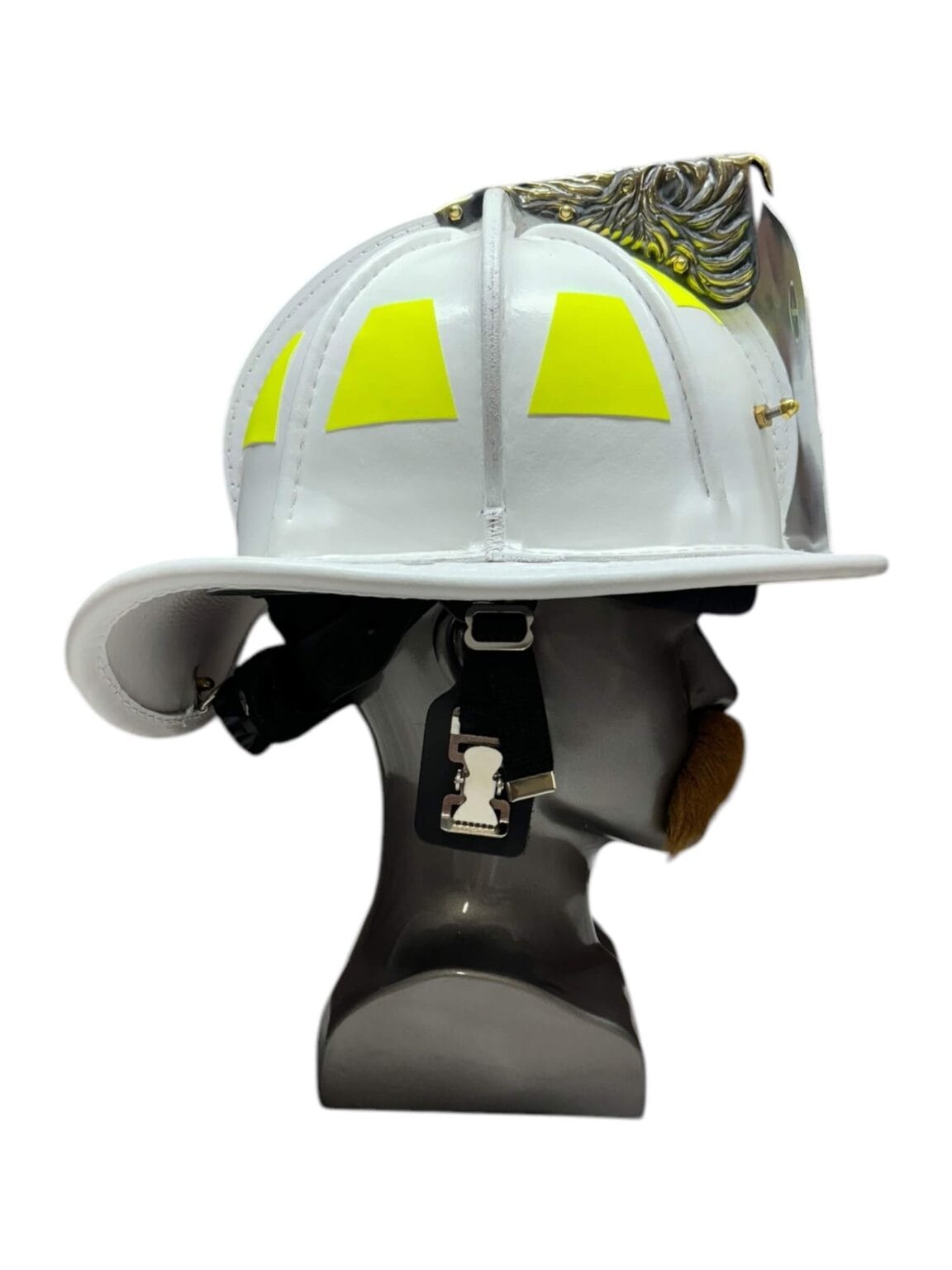
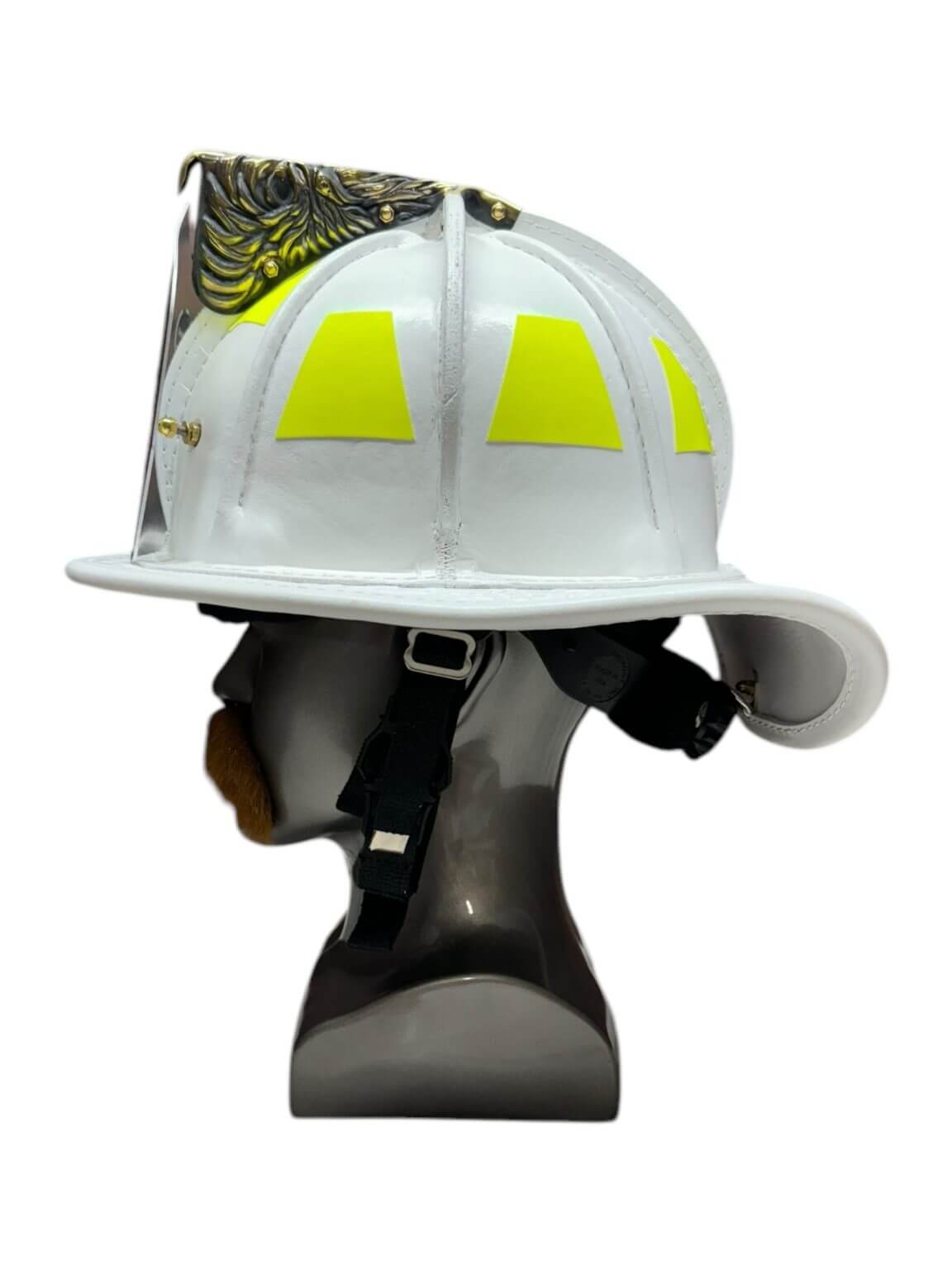
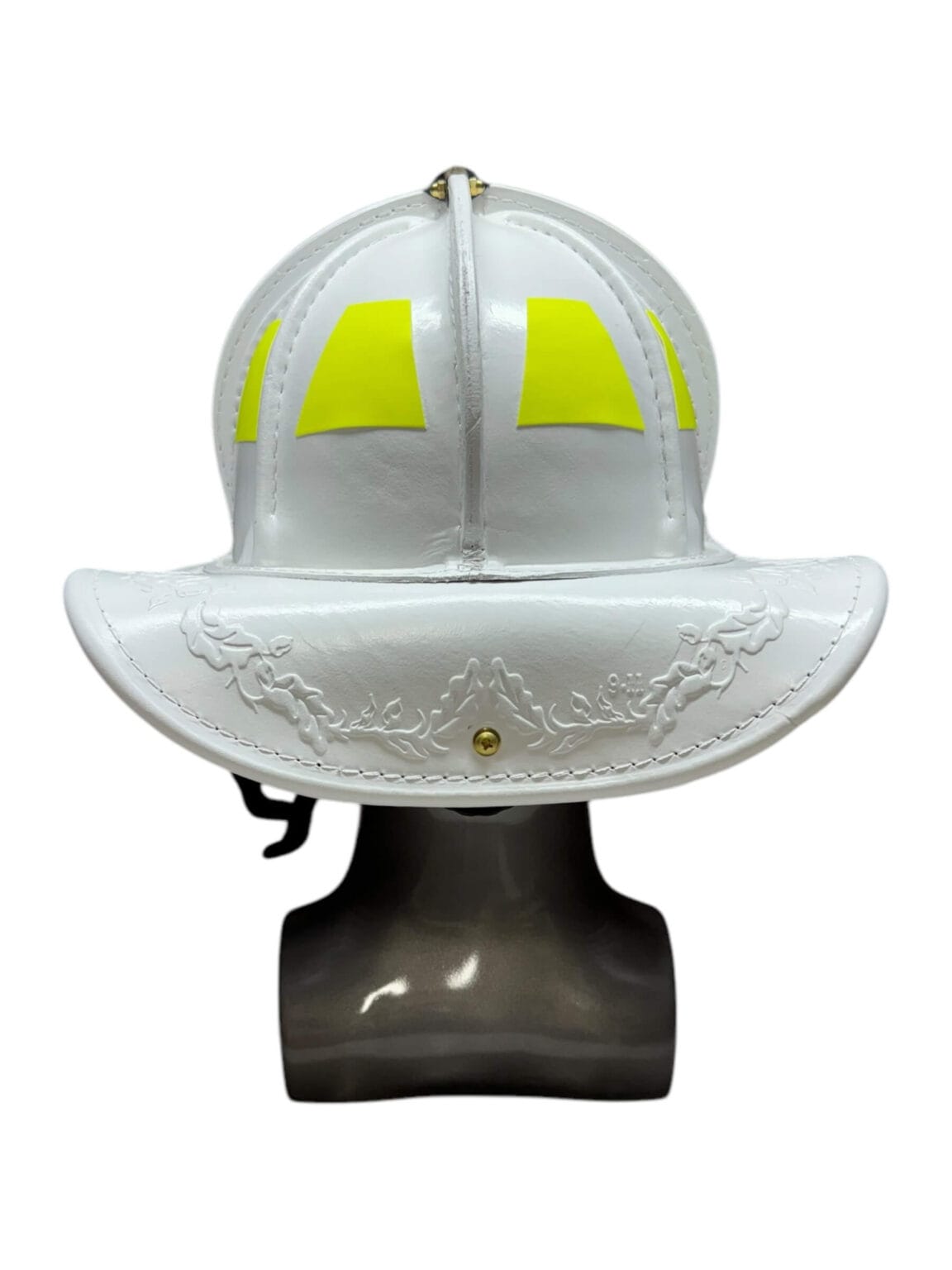


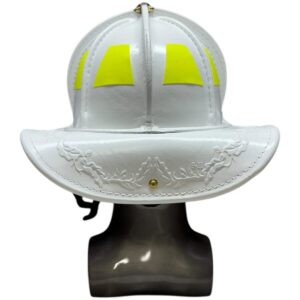
White Fire Helmet
$1,350.00
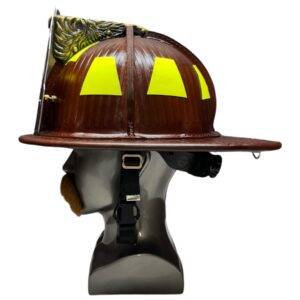
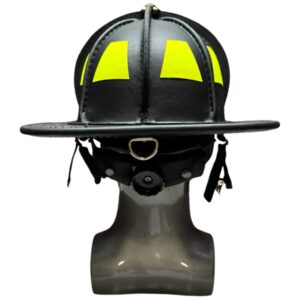
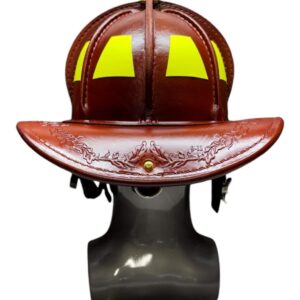
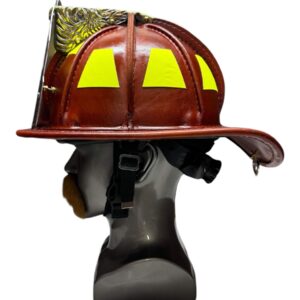
Elite White Fire Helmet: Command with Confidence
Lead the charge in striking style with the Elite White Fire Helmet – the symbol of authority for chief officers and incident commanders in high-stakes structural firefighting. Crafted from premium thermoplastic or authentic vegetable-tanned leather composites, this NFPA 1971-certified guardian weighs under 2 pounds, delivering featherlight balance without compromising on thermal protection up to 500°F, superior impact resistance, and debris deflection.
Featuring a low-profile design with adjustable six-point suspension, flame-retardant Nomex liner for sweat-free shifts, and an integrated amber visor for glare-free visibility in smoke-filled chaos. The crisp white shell stands out for quick identification on scene, customizable with brass eagles, reflective trim, or department emblems in bold contrasts.
Trusted by elite crews worldwide, it’s more than gear—it’s your beacon of leadership. Step into command. Order your white legacy today!
White Fire Helmet: Understanding Its Significance in the Fire Service
When you picture a fire scene, you’ll likely notice firefighters wearing helmets of different colors. Among these, the white fire helmet stands out both literally and figuratively. Far from being just a color choice, the white helmet carries deep meaning within fire service culture and represents specific roles and responsibilities. Whether you’re a new firefighter, considering a career in fire service, or simply curious about fire service traditions, understanding the significance of the white fire helmet provides fascinating insight into this respected profession.
In this comprehensive guide, we’ll explore everything you need to know about white fire helmets—from their historical significance and modern applications to practical considerations like maintenance and selection. You’ll learn why color matters in the fire service and how the white fire helmet fits into the broader ecosystem of firefighter helmet options available today.
About the Author: Our team includes former fire officers with over 25 years of combined experience in fire service leadership and safety equipment specialization. We’ve worked directly with helmet manufacturers and understand both the practical and symbolic aspects of fire helmet colors and their significance in modern fire service operations.

The Meaning Behind the White Fire Helmet
A Symbol of Leadership and Responsibility
In most fire departments across North America, the white fire helmet is reserved for chief officers, including:
-
Fire Chiefs
-
Assistant Chiefs
-
Battalion Chiefs
-
District Chiefs
-
Other high-ranking command staff
This color coding system serves an important practical purpose: it allows everyone on the fire ground to quickly identify the incident commander and other officers. When seconds count, visible leadership identification can streamline communication and improve operational efficiency.
Historical Context of Helmet Colors
The tradition of color-coded fire helmets dates back to the early days of organized firefighting. While practices vary between departments, some common patterns have emerged:
-
White: Chief officers and high-ranking command staff
-
Red: Company officers (Captains, Lieutenants)
-
Yellow or Black: Firefighters and engineers
-
Blue: Safety officers or investigators
This system creates immediate visual hierarchy, helping both fire personnel and civilians identify who’s in charge during complex emergency operations.
Types and Styles of White Fire Helmets
Traditional Leather White Fire Helmets
Many chief officers prefer traditional leather fire helmets for their:
-
Classic appearance that commands respect
-
Durability and longevity
-
Connection to fire service heritage
-
Customization options for rank identification
The white fire helmet in leather maintains all the protective qualities of other colors while providing the distinctive appearance that signifies leadership.
Modern Composite White Fire Helmets
Contemporary firefighter helmet designs in white offer:
-
Lighter weight for reduced fatigue
-
Advanced safety features and materials
-
Enhanced accessory mounting systems
-
Modern aesthetic while maintaining tradition
Many modern white fire helmet models, including those with TL2 certification, provide the same level of protection as their traditional counterparts while offering improved comfort and functionality.
Specialized White Helmet Options
Some departments use white for specialized roles beyond chief officers:
-
Training officers
-
Fire marshals
-
Public education staff
-
Ceremonial purposes
Key Features of Quality White Fire Helmets
When selecting a white fire helmet, whether for actual use or ceremonial purposes, several features deserve careful consideration.
NFPA Compliance: Non-Negotiable Safety
Any firefighter helmet used in structural firefighting must meet NFPA 1971 standards. This includes white fire helmets worn by chief officers who may enter hazardous environments. Key safety aspects include:
-
Impact resistance from falling debris
-
Penetration resistance from sharp objects
-
Heat and flame resistance
-
Electrical insulation properties
-
Retention system effectiveness
-
For complete current standards, refer to the National Fire Protection Association (NFPA) website.
Visibility and Reflective Elements
The white fire helmet offers natural advantages in visibility, which manufacturers often enhance with:
-
High-visibility reflective trim
-
Scotch lite or similar reflective materials
-
Contrasting color elements for better definition
-
Integrated lighting systems for low-visibility conditions
Customization for Rank Identification
White fire helmets typically feature specific customization options:
-
Chief’s front pieces with appropriate rank insignia
-
Special shield configurations
-
Unique color combinations for different chief levels
-
Department-specific markings and identifiers
Choosing the Right White Fire Helmet
Selecting the appropriate white fire helmet involves considering both practical needs and departmental traditions.
Understanding Department Protocols
Before purchasing a white fire helmet, consider:
-
Department SOPs regarding helmet colors and styles
-
Traditional practices within your organization
-
Budget considerations and purchasing guidelines
-
Customization approval processes
Material Considerations: Leather vs. Composite
The choice between traditional and modern materials involves several factors:
Traditional Leather White Fire Helmet:
-
Pros: Classic appearance, durability, tradition
-
Cons: Heavier, requires more maintenance, higher cost
Modern Composite White Fire Helmet:
-
Pros: Lighter weight, lower maintenance, often more affordable
-
Cons: Less traditional appearance, may not suit all department cultures
Fit and Comfort Considerations
A proper fitting firefighter helmet is essential regardless of color:
-
Accurate head measurement following manufacturer guidelines
-
Adjustable suspension systems for custom fit
-
Weight distribution considerations for extended wear
-
Compatibility with other protective equipment
-
Learn more about proper helmet fitting in our comprehensive sizing guide. Visit: alphafiregear.com
Maintenance and Care of White Fire Helmets
Keeping a white fire helmet looking professional requires regular maintenance. Unlike darker helmets, white shows dirt, soot, and discoloration more readily.
Regular Cleaning Protocol
-
After each use: Wipe with damp cloth to remove surface contaminants
-
Weekly cleaning: Use mild soap and soft brush for deeper cleaning
-
Stain treatment: Address discoloration promptly to prevent setting
-
Avoid harsh chemicals that could damage finishes or materials
Preserving the White Finish
-
UV protection to prevent yellowing
-
Proper storage away from direct sunlight
-
Regular conditioning for leather helmets
-
Touch-up paint for composite helmets as needed
Inspection and Maintenance Schedule
-
Daily: Visual inspection for damage or excessive wear
-
Weekly: Thorough cleaning and conditioning (if leather)
-
Monthly: Detailed inspection of all components
-
Annually: Professional inspection and recertification if required
The Role of White Helmets in Fire Service Culture
Symbolism and Tradition
The white fire helmet represents more than just rank—it symbolizes:
-
Leadership responsibility
-
Decision-making authority
-
Experience and knowledge
-
Accountability for crew safety
Psychological Impact
The visibility of the white fire helmet serves important psychological purposes:
-
Clear command structure for fire ground operations
-
Public reassurance during emergencies
-
Crew confidence in leadership visibility
-
Accountability reminder for the wearer
White Fire Helmet Accessories and Customization
Essential Accessories for Chief Officers
-
Radio communication mounts
-
Helmet lighting systems
-
Thermal imaging camera brackets
-
Specialized face protection
-
Identification markings
Customization Options
-
Rank-appropriate front pieces
-
Department insignia and logos
-
Custom paint schemes within department guidelines
-
Special reflective patterns for enhanced visibility
-
Personal identification while maintaining professionalism
Frequently Asked Questions (FAQ)
Q1: Can any firefighter wear a white fire helmet?
No, in most fire departments, the white fire helmet is specifically reserved for chief officers and certain high-ranking command staff. Wearing a white helmet without proper rank would be considered a violation of fire service tradition and protocol in most organizations.
Q2: Do white fire helmets get dirty more easily than other colors?
Yes, white fire helmets do show dirt, soot, and discoloration more readily than darker helmets. However, regular cleaning and maintenance can keep them looking professional. Many chief officers consider the maintenance requirement part of the responsibility that comes with their position.
Q3: Are white fire helmets less safe because they’re a lighter color?
No, the color of a firefighter helmet doesn’t affect its safety performance. White helmets meet the same NFPA 1971 safety standards as helmets of other colors. The materials and construction determine safety, not the color of the finish.
Q4: Why do some departments use different color systems?
While the white-for-chiefs system is common, some departments use variations based on their unique history and traditions. Always check with individual departments to understand their specific color coding system for fire helmets.
Q5: Can a white fire helmet be used for actual firefighting, or is it just ceremonial?
A properly certified white fire helmet provides the same level of protection as any other NFPA-compliant firefighter helmet and is absolutely suitable for structural firefighting. Many chief officers regularly wear their white helmets in active fire situations where command presence is needed.
Be the first to review “White Fire Helmet”
Related products


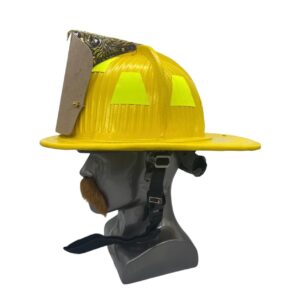


Phenix helmets


Reviews
There are no reviews yet.